




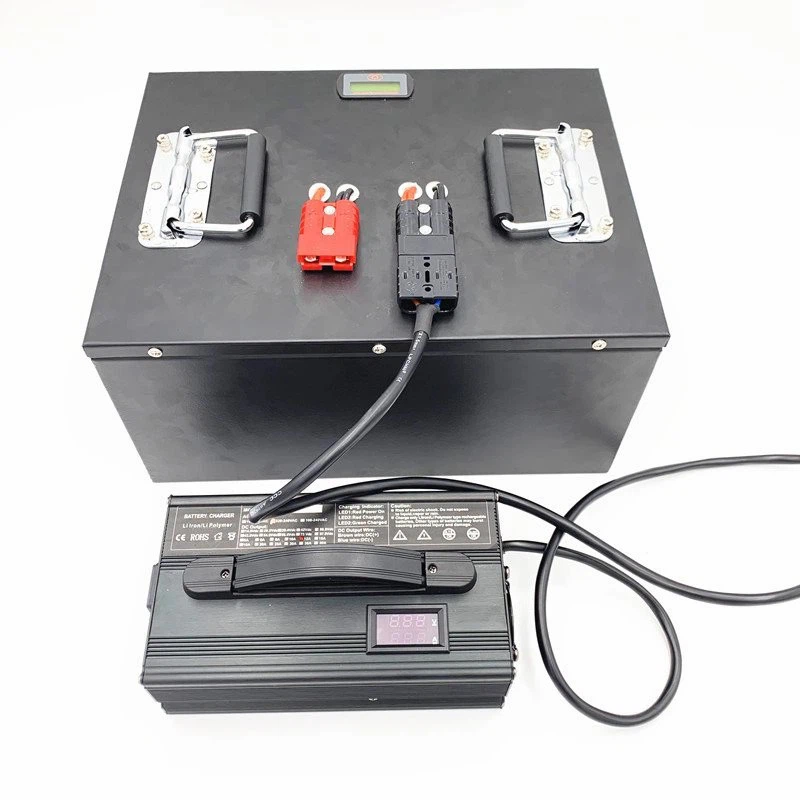
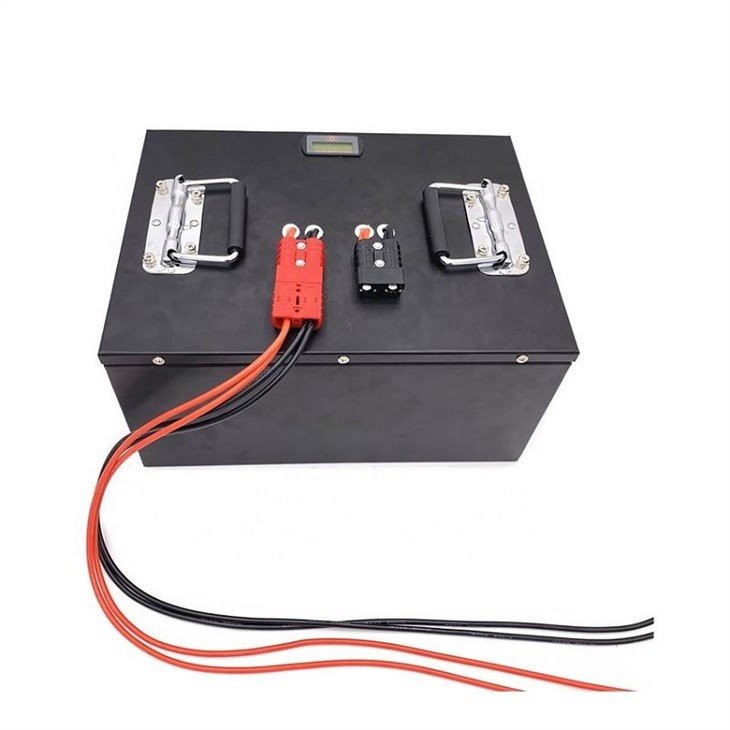
24V 60Ah Lithium Battery Pack For AGV
What is AGV Lithium Batteries?
Designed for autonomous guided vehicles (AGVs) and other material handling equipment, presents many cost, performance, and environmental improvements over the traditional lead acid batteries.
Why Choose Us
Quality assurance
Out of passion for green energy, United has set up a professional renewable energy team with more than 10 years of experience in the rechargeable lithium-iron battery pack industry.
Good service
You can be sure that you are getting the most competitive battery packs on the market backed by top level customer service.
Reasonable price
The price is reasonable and will bring you different surprises.
Fast delivery
The delivery speed is fast, and the delivery will be sorted out for you as soon as the order is placed.
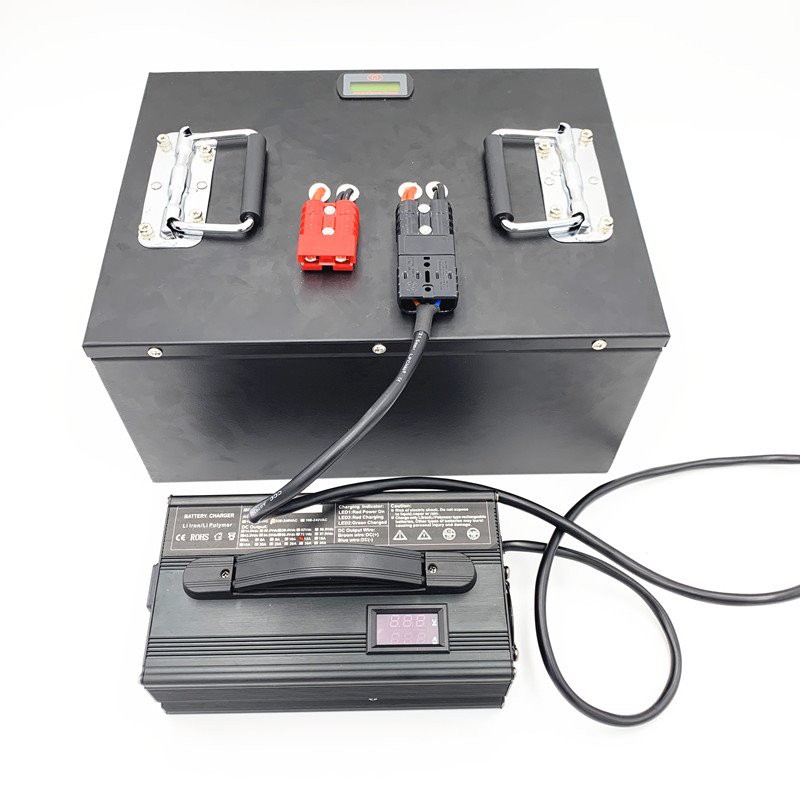
24V 60Ah Lithium Battery Pack For AGV
AGVs have been around since the 1950s as a solution for moving heavy materials around large industrial buildings. The term AGV can apply to multiple types of vehicles, including carts, tuggers,...
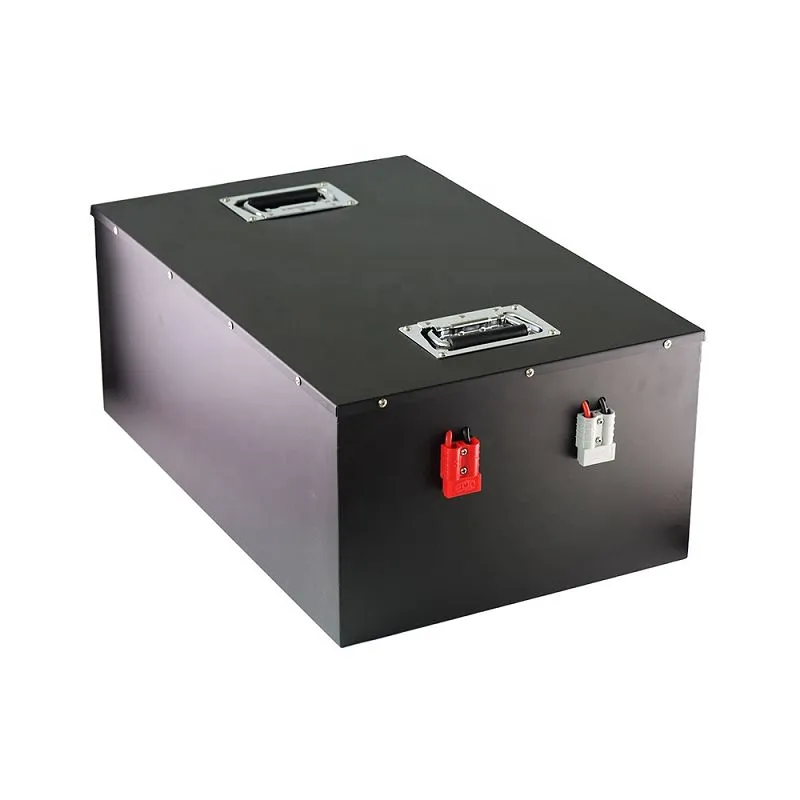
48V 200Ah AGV Robot Lithium Battery Pack
For operations trying to keep things moving 24 hours a day, having to stop to change out heavy lead acid batteries for charging is a huge time waster.
Advantages of 24V60Ah Lithium Battery Pack For AGV
Battery Management System
BMS integral to the Battery Pack ensures optimal battery performance for longer run times between charge and during operations. BMS extends the lifespan of the battery, and reduces speeds at low states of charge.
Longer Lasting
The flat discharge curve and high sustained voltage mean forklifts run faster on each charge, without getting sluggish. The overall battery life lasts 2x than that of lead-acid alternatives, thus providing significant financial savings.
Lower Overal Costs
Lithium from COMBINE Power reduces costs in multiple ways, including lower energy bills to run your equipment, battery packs that last 5 - 10 years instead of 1 - 3 years, improved productivity by not having to regularly swap batteries, and more.
Fast Charge On Demand
All you need is one battery per truck, even with 2- or 3-shift operations! No more battery rooms. No ventilation needed while charging. Quick opportunity charge means your crew can simply plug in the equipment during breaks, then get back to work.
Batteries for industrial trucks, mobile robots and autonomous vehicles have very special requirements in terms of performance, lifespan and charging cycles, which is why high-quality lithium-ion batteries are important to avoid unnecessary costs. Knowledge of how to correctly charge the batteries is also important to ensure safety and maintain the functionality of the batteries for industrial trucks.
Lithium-ion batteries offer numerous advantages. They have a higher efficiency, a much higher energy density and a longer life cycle. They are also much less maintenance than lead acid batteries. Above all, it is possible to charge lithium-ion batteries during short breaks throughout operation with the etaLINK wireless charging system. This wireless in-process charging is essential for the complete automation of the logistics process, also for two or three working shifts.
The lithium battery technology for automated guided vehicles (AGV) have, in addition to the much longer operating time, lifespan and faster charging time, the recharge efficiency exceeds by far and you no longer have to be afraid of the batteries being completely discharged. In the medium term, such automated guided vehicle batteries are cheaper in contrast to the classic lead-acid batteries (SLAB).
Lithium-titanate batteries (LiFePO4 and LTO for AGV)
Wherever the highest demands are placed on endurance, special Li-ion batteries are required. The disadvantages of classic lead-acid batteries are:
Cleaning and greasing the battery poles
Checking the connections
Checking and filling up the battery water levels
Cleaning the chargers
They are completely eliminated with the Wiferion system solution, consisting of etaSTORE batteries and the etaLINK systems.
Lithium battery for high performance: EtaSTORE
With the automated guided vehicle battery etaSTORE we rely entirely on lithium iron phosphate & lithium-titanate battery technology for AGV. It enables in-process charging, has long lifetimes, significantly simplified processes, battery management and lean infrastructures – and is therefore the most economical solution in logistics in the long term. The close cooperation among other things with Japanese battery cell manufacturers guarantees the outstanding longevity of the battery pack and energy storage, with highest temperature performance, best electrode material for the highest level of safety.
All batteries can be used modularly, have a BMS and meet the current applicable IEC standard 62619 for use in industrial applications as well as UL 2271 – so you can also use etaSTORE outdoors. Thereforey you are able to replace lead-acid batteries, like those used in many service robots, AGVs and electric-powered forklifts with the highest battery safety.
What Are Lithium Batteries Made of?
The lithium-ion cell is made up of four key components:
It consists of the anode that allows the flow of electric current through an external circuit; The anode stores lithium ions when the battery is charged
Secondly is the cathode, tasked with determining the voltage and capacity of the battery; It is the source of lithium ions
Then, there is the electrolyte that functions as the conduit of lithium ions between the cathode and anode; It is made up of additives, solvents, and salts.
Lastly, we have the separator, which is a physical barrier with the function of keeping the cathode and anode away from each other.
What Are the Applications of Lithium Batteries?
There are no limitations when it comes to the application of lithium-ion batteries in the real world as it has been tested by different companies and used in portable electronics or small devices (laptop, camcorders, energy storage systems, and even in as electric vehicle battery). These are the top applications of lithium batteries;
Portable Power Packs: It has already been proven that lithium batteries do a great job to power our laptops, computers, and phones. They are also smaller and lighter than lead-acid batteries. Transitioning the existing technology to a more effective portable power pack can be done without stress, thanks to custom lithium battery options.
Dependable Electric and Recreational Vehicle Power: You can depend on lithium batteries to power your electric or recreational vehicle as their reduced size and weight make for increased efficiency. So, if you are thinking of exploring remote locations and you want to be safe and comfortable while you do so, you should opt for li-ion batteries to power your vehicle.
Surveillance or Alarm Systems in Remote Locations: The omission of hard-wired electricity limits the security of most people. However, you can securely monitor any location you want with an alarm or surveillance system that runs on lithium-ion batteries.
Lightweight Marine Performance: The mixture of electricity and water could pose certain problems. It doesn't matter if you need to power your whole yacht or power a small trolling motor; you can rely on lithium batteries to get the job done.
Solar Power Storage: Because of their quick charge process and their manner of charging, lithium batteries are the perfect choice for solar panels as they allow you to get the most of the potential power storage from the sunlight daily.
UPS or Emergency Power Backup: Since lithium batteries are known to store energy efficiently, they are the ideal choice for a UPS or emergency power backup to protect you from power instability or power loss.
What is Lithium Battery Technology?
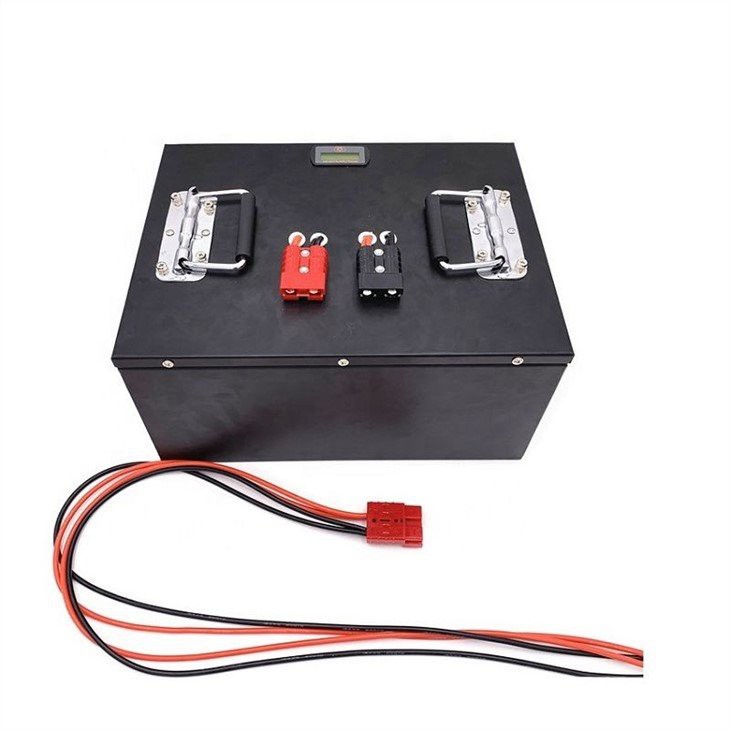


Lithium batteries stand apart from other battery chemistries due to their high energy density and low cost per cycle. However, "lithium battery" is an ambiguous term. There are about six common chemistries of lithium batteries, all with their own unique advantages and disadvantages. For renewable energy applications, the predominant chemistry is Lithium Iron Phosphate (LiFePO4). This chemistry has excellent safety, with great thermal stability, high current ratings, long cycle life, and tolerance to abuse.
Lithium Iron Phosphate (LiFePO4) is an extremely stable lithium chemistry when compared to almost all other lithium chemistries. The battery is assembled with a naturally safe cathode material (iron phosphate). Compared to other lithium chemistries iron phosphate promotes a strong molecular bond, which withstands extreme charging conditions, prolongs cycle life, and maintains chemical integrity over many cycles. This is what gives these batteries their great thermal stability, long cycle life, and tolerance to abuse. LiFePO4 batteries are not prone to overheating, nor are they disposed to 'thermal runaway' and therefore do not over-heat or ignite when subjected to rigorous mishandling or harsh environmental conditions.
Unlike flooded lead acid and other battery chemistries, Lithium batteries do not vent dangerous gases such as hydrogen and oxygen. There's also no danger of exposure to caustic electrolytes such as sulfuric acid or potassium hydroxide. In most cases, these batteries can be stored in confined areas without the risk of explosion and a properly designed system should not require active cooling or venting.
Lithium batteries are an assembly composed of many cells, like lead-acid batteries and many other battery types. Lead acid batteries have a nominal voltage of 2V/cell, whereas lithium battery cells have a nominal voltage of 3.2V. Therefore, to achieve a 12V battery you'll typically have four cells connected in a series. This will make the nominal voltage of a LiFePO4 12.8V. Eight cells connected in a series make a 24V battery with a nominal voltage of 25.6V and sixteen cells connected in a series make a 48V battery with a nominal voltage of 51.2V. These voltages work very well with your typical 12V, 24V, and 48V inverters.
Lithium batteries are often used to directly replace the lead-acid batteries because they have very similar charging voltages. A four cell LiFePO4 Battery (12.8V), will typically have a max charge voltage between 14.4-14.6V (depending on manufacturers recommendations). What's unique to a lithium battery is that they do not need an absorption charge or to be held in a constant voltage state for significant periods of time. Typically, when the battery reaches the max charge voltage it no longer needs to be charged. The discharge characteristics of LiFePO4 batteries is also unique. During discharge, lithium batteries will maintain a much higher voltage than lead-acid batteries typically would under load. It's not uncommon for a lithium battery to only drop a few tenths of a volt from a full charge to 75% discharged. This can make It difficult to tell how much capacity has been used without battery monitoring equipment.
A significant advantage of lithium over lead-acid batteries is that they do not suffer from deficit cycling. Essentially, this is when the batteries cannot be fully charged before being discharged again the next day. This is a very big problem with lead-acid batteries and can promote significant plate degradation if repeatedly cycled in this manner. LiFePO4 batteries do not need to be fully charged regularly. In fact, it's possible to slightly improve overall life expectancy with a slight partial charge instead of a full charge.
Efficiency is a very important factor when designing solar electric systems. The round-trip efficiency (from full to dead and back to full) of the average lead acid battery is about 80%. Other chemistries can be even worse. The round-trip energy efficiency of a Lithium Iron Phosphate battery is upwards of 95-98%. This alone is a significant improvement for systems starved of solar power during winter, the fuel savings from generator charging can be tremendous. The absorption charge stage of lead-acid batteries is particularly inefficient, resulting in efficiencies of 50% or even less. Considering lithium batteries do not absorption charge, the charge time from completely discharged to completely full can be as little as two hours. It's also important to note that a lithium battery can undergo a nearly complete discharge as rated without significant adverse effects. It is, however, important to make sure the individual cells do not over discharge. This is the job of the integrated Battery Management System (BMS).
The safety and reliability of lithium batteries is a big concern, thus all assemblies should have an integrated Battery Management System (BMS). The BMS is a system that monitors, evaluates, balances, and protects cells from operating outside the "Safe Operating Area". The BMS is an essential safety component of a lithium battery system, monitoring and protecting the cells within the battery against over current, under/over voltage, under/over temperature and more. A LiFePO4 cell will be permanently damaged if the voltage of the cell ever falls to less than 2.5V, it will also be permanently damaged if the voltage of the cell increases to more than 4.2V. The BMS monitors each cell and will prevent damage to the cells in the case of under/over voltage.
Another essential responsibility of the BMS is to balance the pack during charging, guaranteeing all cells get a full charge without overcharging. The cells of a LiFePO4 battery will not automatically balance at the end of the charge cycle. There are slight variations in the impedance through the cells and thus no cell is 100% identical. Therefore, when cycled, some cells will be fully charged or discharged earlier than others. The variance between cells will increase significantly over time if the cells are not balanced.
In lead-acid batteries, current will continue to flow even when one or more of the cells are fully charged. This is a result the electrolysis taking place within the battery, the water splitting into hydrogen and oxygen. This current helps to fully charge other cells, thus naturally balancing the charge on all cells. However, a fully charged lithium cell will have a very high resistance and very little current will flow. The lagging cells will therefore not be fully charged. During balancing the BMS will apply a small load to the fully charged cells, preventing it from overcharging and allowing the other cells to catch up.
Lithium batteries offer many benefits over other battery chemistries. They are a safe and reliable battery solution, with no fear of thermal runaway and/or catastrophic meltdown, which is a significant possibility from other lithium battery types. These batteries offer extremely long cycle life, with some manufacturers even warranting batteries for up to 10,000 cycles. With high discharge and recharge rates upwards of C/2 continuous and a round-trip efficiency of up to 98%, it's no wonder these batteries are gaining traction within the industry. Lithium Iron Phosphate (LiFePO4) is a perfect energy storage solution.
Our Factory
Here at Combine New Energy, green energy is more than just a trend. We are devoted to creating a new standard in energy storage. Our goal is to enable the widespread deployment of this cutting-edge technology to make green, renewable energy available for everyone. Combine LiFePO4 battery packs are made from 100% safe, nontoxic, renewable energy that can be charged and discharged repeatedly. Our packs are built to last for years. You can be sure that you are getting the most competitive battery packs on the market backed by top level customer service.




FAQ
Previous
No InformationYou Might Also Like



Send Inquiry